
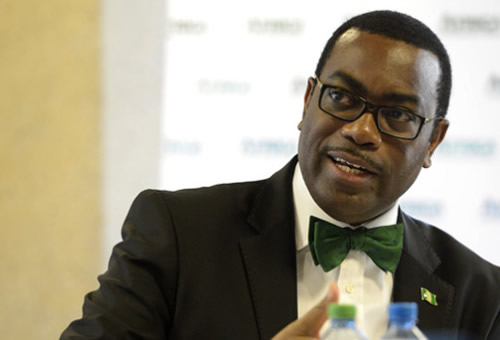
The head of the African Development Bank has urged African countries to put an end to natural resource-backed loans in an interview to the Associated Press.
Akinwumi Adesina called the deals bad and pointed to a bank initiative that helps countries renegotiate them.
“The risk that one has with natural resource-backed loans, as far as I’m concerned, is that they are just bad, bad, and bad. First and foremost, because you can’t price the asset properly. If you have minerals, oil, metals, and gas under the ground, it’s not actually being marketed, so how you actually come up with a price of that for a long-term contract? It’s a challenge.”
“Second, is that the negotiation is very asymmetric. Most countries that want to do asset-natural resource-backed loans are probably dealing with bigger countries, bigger commercial banks that want to give them a loan and say, ‘Well, look, it’s urgent, we need it. But this is what you have to sign.’ But it is those that actually want to give the loan that have the upper power, not the person who wants or the country that wants to receive the loan.”
Linking future revenue from natural resource exports to loan paydowns is often touted as a way for recipients to get financing for infrastructure projects and for lenders to reduce the risk of not getting their money back.
The shift to renewable energy and electric vehicles has caused a spike in the demand for critical minerals, driving these kind of loans.
Litany of problems
Adesina, whose Abidjan, Ivory Coast-based institution helps finance development in African countries, said these arrangements come with a litany of problems.
He highlighted the uneven nature of the negotiations, with lenders typically holding the upper hand and dictating terms to cash-strapped African nations.
This power imbalance, coupled with a lack of transparency and the potential for corruption, creates fertile ground for exploitation, Adesina said.
“These are the reasons I say Africa should put an end to natural resource-backed loans,” he said as he proceeded to point to a bank initiative that helps “countries renegotiate those loans that are asymmetric, not transparent and wrongly priced.”
The former Nigerian minister for Agriculture said loans secured with natural resources pose a challenge for development banks like his and the International Monetary Fund, which promote sustainable debt management.
Countries may struggle to get or repay loans from these institutions because they have to use the income from their natural resources — typically crucial to their economies — to pay off resource-tied debts, he said.
At least 11 African countries
Adesina specifically mentioned Chad’s crippling financial crisis after an oil-backed loan from commodity trader Glencore left the central African nation using most of its oil proceeds to pay off its debt.
A Glencore spokesperson did not immediately respond to a request for comment.
After Chad, Angola and the Republic of Congo approached the IMF for support, the multilateral lender insisted on the renegotiation of their natural resource-backed loans.
At least 11 African countries have taken dozens of loans worth billions of dollars secured with their natural resources since the 2000s, and China is by far the top source of funding through policy banks and state-linked companies.
Western commodity traders and banks, such as Glencore, Trafigura and Standard Chartered, also have funded oil-for-cash deals, notably with the Republic of Congo, Chad and Angola.
Standard Chartered didn’t immediately respond to an email seeking comment, while Trafigura pointed to its 2020 report called “Prepayments Demystified,” which says that “trading firms are enabling production that would otherwise not be possible — thus underpinning economic growth, job creation and the generation of fiscal revenues in the countries concerned.”
Adesina said there was no “fixation” on one country as being behind these types of loans.
Source: africanews.com
Related Posts